Copla connects assets, risk, controls, policies and evidence into one system, instead of running it on spreadsheets and folders. Risk comes first: understand what needs protecting, then build controls around it. Frameworks set the requirements. Copla runs the system that meets them, automated for the repetitive work, CISO-guided for the judgment calls.
Trusted by teams running their ISMS on Copla.
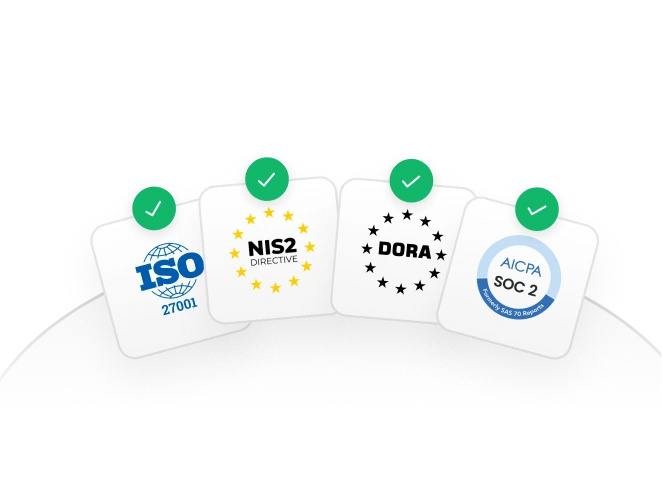
The same assets, risks, controls and evidence built for ISO 27001 extend into DORA, NIS2, SOC 2, PCI DSS and MiCA as those requirements come up. The ISMS becomes the foundation of the wider GRC system, not a standalone certification project.
Copla brings every part of the ISMS into one system, each piece connected to the ones around it.
Maintain a clear inventory of assets, owners and criticality, giving your ISMS an accurate foundation for risk assessment and controls.
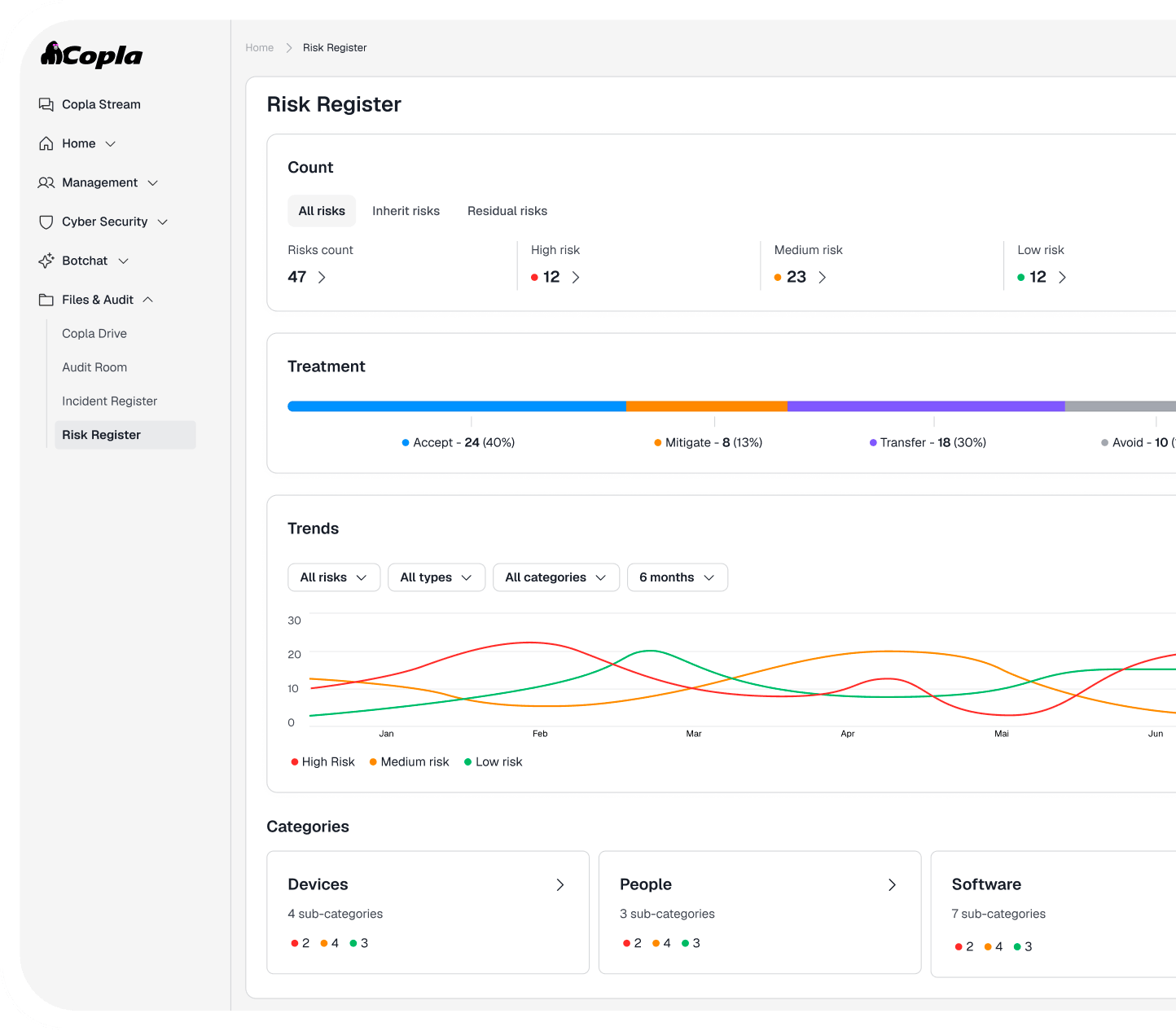
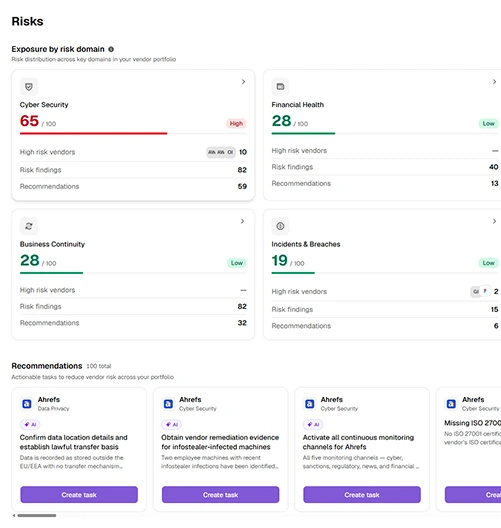
Assess likelihood, impact and treatment for each risk, rated against the assets it actually threatens, not a generic checklist.
Map controls to the risks that justify them, and keep the Statement of Applicability current as controls change.
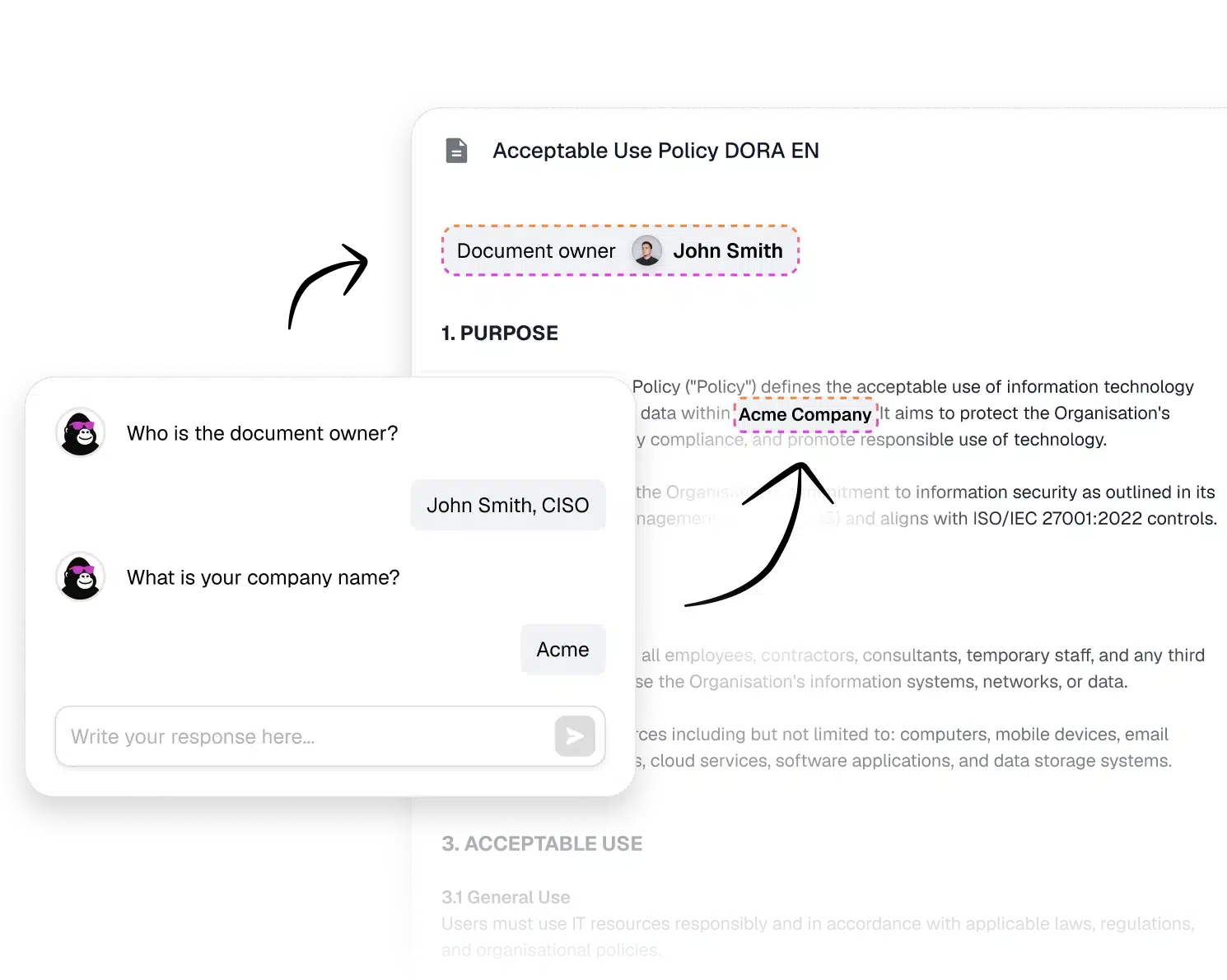
AI drafts and updates your ISMS policies from real assets, risks and controls, instead of a generic template.
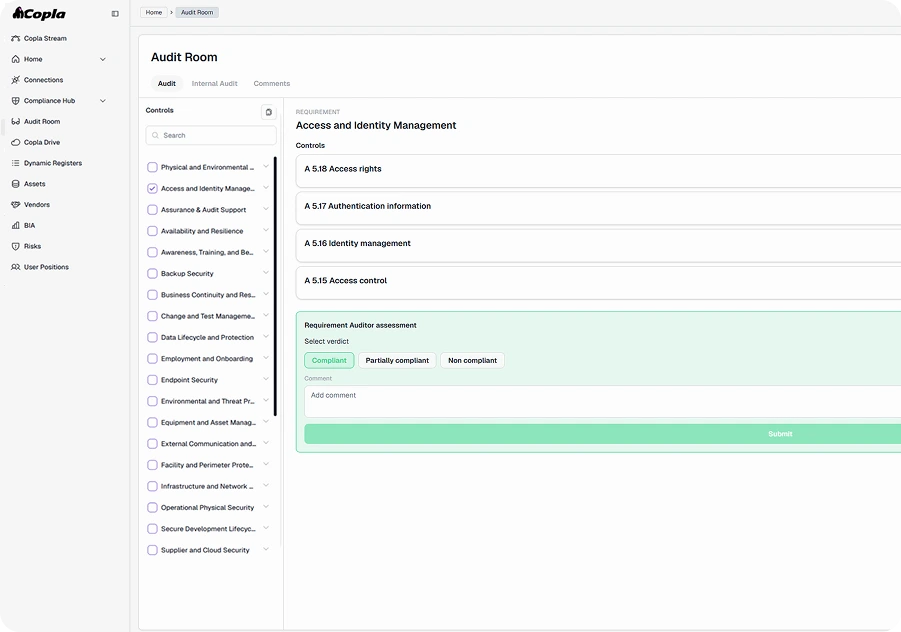
Attach evidence to the control it proves, and give auditors scoped access to exactly what they need.
Log and track security incidents against the assets and controls they affect, with ownership and status through resolution.
Assign owners and deadlines to every control, risk and action, so nothing depends on someone remembering.
An ISMS holds up when risk drives the work, not a checklist. Assets and real risk come first; controls follow because they reduce exposure, not because a template lists them.
Record assets and link them to what they're actually subject to, then run a protection-needs analysis so criticality comes from the business, not a guess. AI-assisted asset discovery, in beta, helps surface what manual entry misses.
Controls earn their place because a specific risk justifies them, not because a checklist works through Annex A's 93 controls in order. Copla maps each control to the risk and asset behind it.
Every control connects to the risk it addresses, the evidence that proves it, and the owner responsible for it. Risks and incidents get identified, rated and tracked the same way, so the ISMS holds up in an audit and in the weeks between them.
Copla's in-house CISOs help set up the ISMS, review evidence, validate gaps and guide the team through certification, so a small team isn't operating alone. As the business evolves, Copla helps keep controls, evidence and documentation current.

COO, Axiology
Co-Founder & CPO, Evergrowth
CEO, Codigi
Managing Director, FMpay
1
An ISMS depends on staying current with the assets, vendors and risks it is meant to cover, but all three change faster than most registers are updated. Policies and assessments quickly fall behind. Over time, the ISMS stops reflecting how the business actually operates.
2
Most manual programmes start from a control checklist, ISO 27001’s 93 Annex A controls, rather than actual risk. Controls get implemented because the list says so, not because a real exposure justifies them.
3
Policies sit in one folder, risk assessments in a spreadsheet, incident notes in email. Nobody can show the current state of the ISMS on demand, so evidence collection turns into a scramble and the Statement of Applicability needs a rewrite nobody scheduled, days before an audit.
4
A manual ISMS usually runs through one person, holding the whole picture in their own head and inbox. When they're out or gone, the ISMS has no backup.
How it works
No two ISMS programmes look the same, because no two risk profiles do. Copla builds yours around your scope, assets, and the risks you actually carry.
Copla gathers the context needed to scope it around how the company actually operates, not a generic template.
Assets, systems, data and vendors get recorded and kept current: everything the ISMS actually needs to cover.
Risks get assessed against the business itself: likelihood, impact, ownership and treatment, not a generic severity scale.
Controls and the Statement of Applicability follow from that risk picture, with Copla drafting the supporting policies and documentation using AI.
Evidence accumulates against each control as the work happens, so proof that ISMS operates in practice is already there.
The same system carries internal review, certification and surveillance audits, and ongoing management visibility.
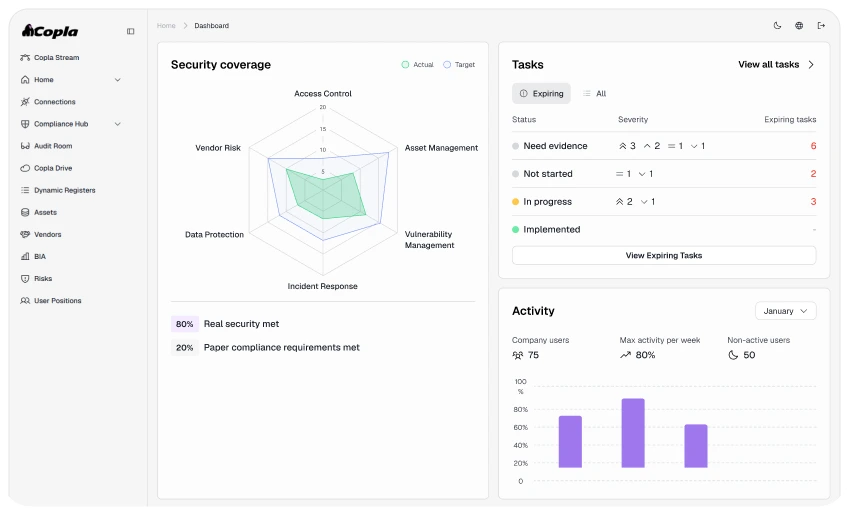
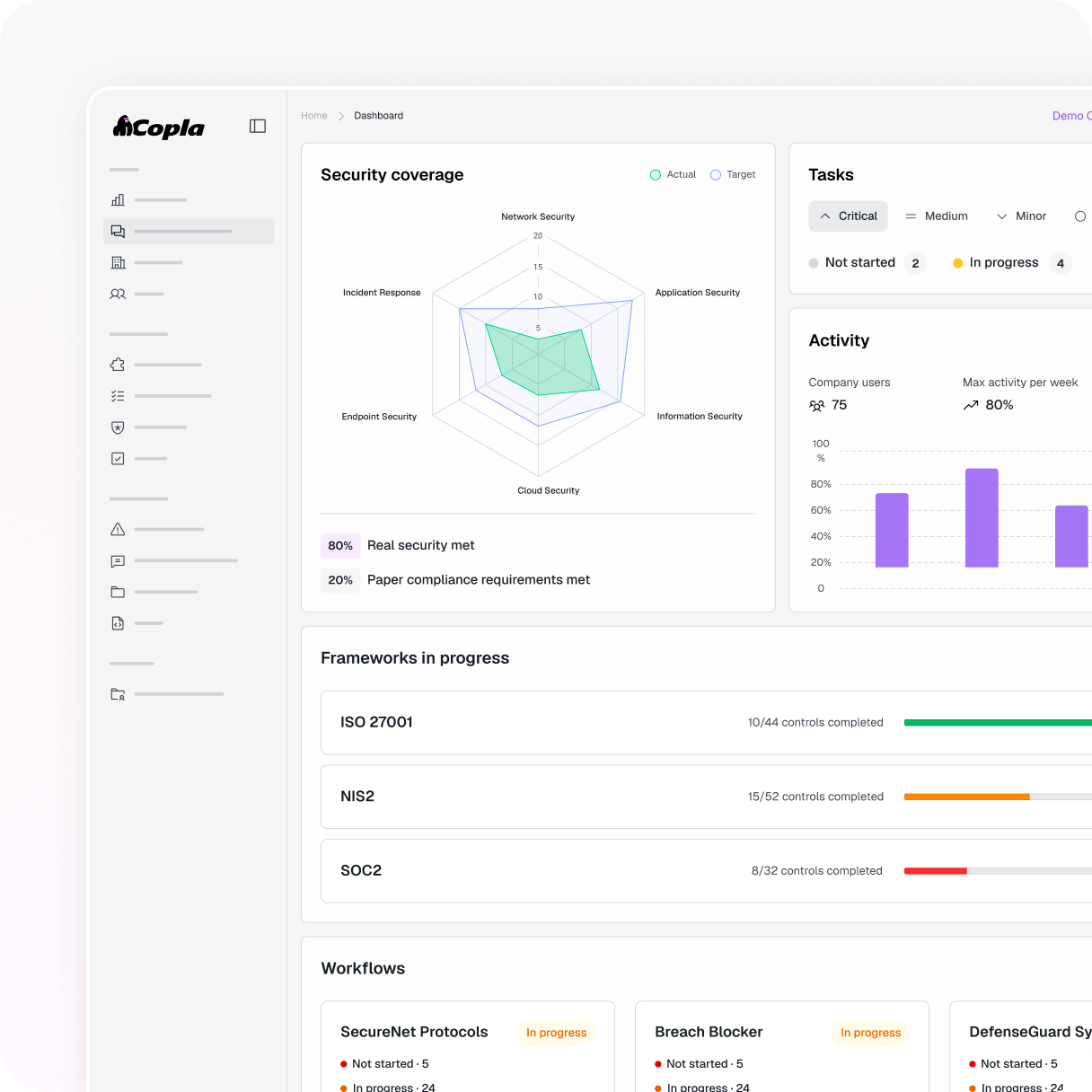
ISMS dashboard
Asset, risk and control mapping
AI-generated policies and documentation
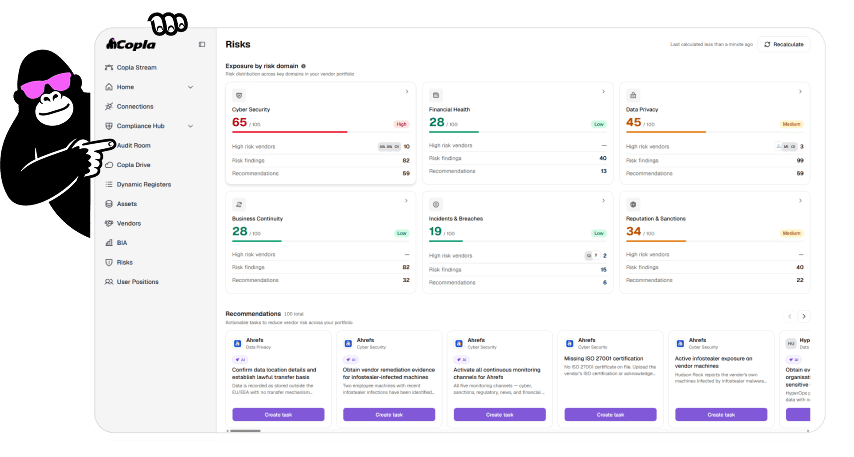
Risk and incident management
Evidence repository and auditor view
ISMS dashboard
Asset, risk and control mapping
AI-generated policies and documentation
Risk and incident management
Evidence repository and auditor view
How we compare
How Copla compares with running an ISMS by hand, and with self-service ISMS tools, on the capabilities that decide whether it holds up under audit.
Capability
Live asset inventory
Risk-driven control mapping
Asset-risk-control traceability
AI-generated policies and documentation
Evidence linked to controls
Workflow ownership and reminders
Multi-framework reuse
Expert CISO guidance
Continuous ISMS visibility
Audit-ready evidence room
Manual ISMS
Self-Service ISMS Tools
Partial
Partial
Partial
Partial
Partial
Unlike other platforms that leave you to figure things out on your own, Copla pairs the tooling with dedicated expertise.
An information security management system (ISMS) are the policies, risk assessments, controls and evidence an organization uses to manage information security on an ongoing basis. ISO 27001 defines the requirements for it. An ISMS is broader than any one audit.
Certification confirms, at a point in time, that an ISMS meets the standard. The ISMS is the ongoing system behind that: assets, risks, controls and evidence, running before, during and after the audit. Certification is one outcome of running it properly, not the whole task.
Copla connects the ISMS into one system: assets and business context first, then risk, then the controls that risk justifies, then evidence and review. A dedicated CISO supports the judgment calls throughout.
No. Working through Annex A's 93 controls in order tends to size controls to a template, not the business. Copla starts from assets and risk, then builds the controls and Statement of Applicability those risks actually justify.
Yes. Copla replaces the spreadsheets and disconnected documents most manual ISMS programmes rely on with one connected system for assets, risk, controls, policies, incidents and evidence. The organization still owns the decisions; Copla keeps the system current.
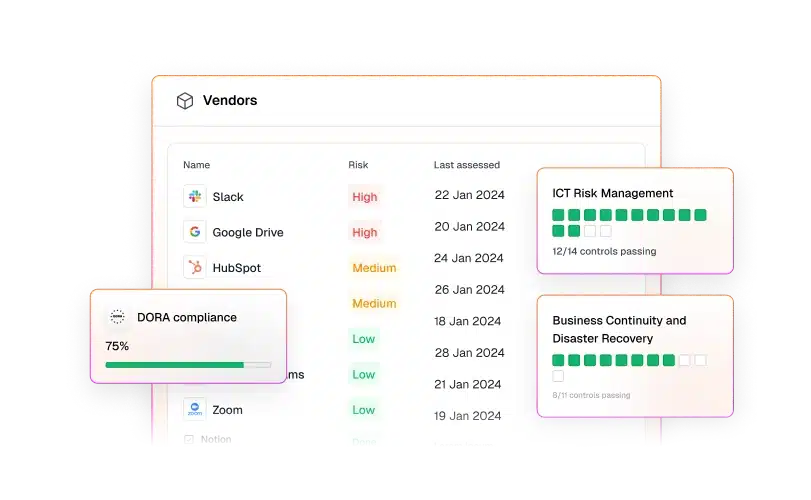
Yes. Controls, policies and evidence built for an ISO 27001 ISMS map across to DORA, NIS2, SOC 2, PCI DSS and MiCA wherever requirements overlap. A second framework reuses work already done, instead of starting over.