

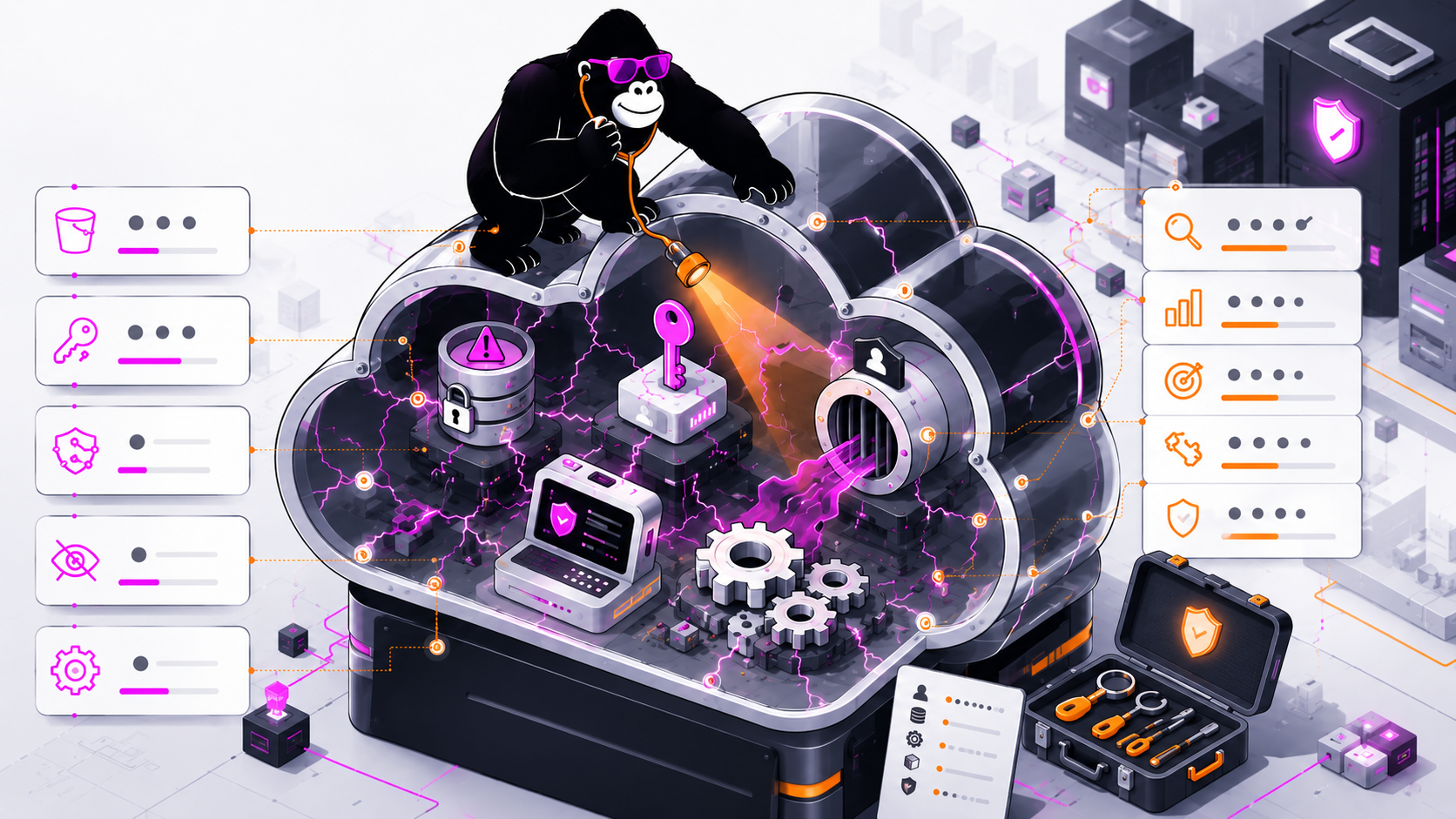


According to IBM’s Cost of a Data Breach Report, approximately 82% of data breach incidents now involve data stored in the cloud. The migration to cloud infrastructure has not just changed where organisations store and process data; it has fundamentally altered the security landscape. New threat surfaces, shared responsibility models, and the pace of cloud service adoption have created a set of security issues that traditional on-premises controls were not designed to address. This guide covers the most significant cloud computing security issues and challenges organisations face, explains why each one matters, and outlines what to do about them.
Why Cloud Security Is Different
Cloud computing introduces a shared responsibility model that does not exist in traditional on-premises environments. The cloud service provider (CSP) is responsible for securing the underlying infrastructure. The customer is responsible for securing what runs on top of it: the data, configurations, identities, and applications.
The boundary between provider and customer responsibility varies by service model. In Infrastructure as a Service (IaaS), the customer manages almost everything above the hypervisor. In Platform as a Service (PaaS), the provider manages more of the stack. In Software as a Service (SaaS), the provider manages nearly all of the infrastructure and application layers, but the customer still owns data classification, access controls, and user management.
This division of responsibility is the root cause of many cloud security incidents. Organisations that assume the cloud provider handles security end up with controls that do not cover their side of the model. Understanding which risks fall on your side is the starting point for addressing every issue in this guide.
Misconfigurations
Misconfiguration is the most common cause of cloud security incidents. Research from Check Point indicates that 82% of enterprises have experienced security incidents due to cloud misconfigurations. These are not sophisticated attacks. They are preventable errors in how cloud resources are set up.
Common misconfigurations include:
- Storage buckets (AWS S3, Azure Blob, Google Cloud Storage) left publicly accessible
- Overly permissive Identity and Access Management (IAM) policies that grant more access than necessary
- Databases exposed to the internet without network restrictions
- Default credentials left unchanged on cloud services and virtual machines
- Encryption not enabled for data at rest or in transit
- Logging and monitoring disabled or not configured for critical services
The root cause is typically a combination of the speed at which cloud resources are provisioned, the complexity of cloud-native configuration options, and insufficient governance processes. Developers can spin up new infrastructure in minutes, often without the security review that an on-premises change would require.
How to address it: Implement cloud security posture management (CSPM) tooling that continuously scans your cloud environment for misconfigurations. Establish baseline configuration standards for all resource types, enforce them through infrastructure-as-code templates, and integrate security checks into the deployment pipeline.
Identity and Access Management Failures
Identity is the perimeter in cloud environments. Traditional network-based security assumed that users inside the corporate network could be trusted. Cloud environments have no such perimeter. Every access request arrives over the internet, and the only thing standing between an attacker and your data is the identity and access management layer.
The most common IAM failures in cloud environments include excessive permissions (users and service accounts with more access than they need), lack of multi-factor authentication (MFA) on privileged accounts, stale accounts that remain active after employees leave, and service account keys that are shared or never rotated.
How to address it: Apply the principle of least privilege rigorously. Implement MFA for all human users, especially privileged accounts. Conduct regular access reviews and automate the deprovisioning of accounts when employees or contractors leave. For service accounts, use short-lived credentials and rotate keys on a defined schedule. Organisations maintaining an ISO 27001 access control policy already have a framework for structuring these controls.
Data Breaches and Data Loss
Cloud data breaches result from a combination of the issues described above: misconfigurations expose data, weak access controls allow unauthorised access, and insufficient encryption means that exposed data is readable. The consequence is significant. IBM reports the average cost of a data breach at $4.88 million.
Cloud-specific data loss risks include:
- Accidental deletion of cloud-hosted data without adequate backup
- Vendor lock-in that prevents data portability when a provider relationship ends
- Insufficient data classification, leading to sensitive data stored in environments with lower security controls
- Cross-tenant data leakage in multi-tenant environments due to isolation failures
How to address it: Classify data by sensitivity before storing it in the cloud. Encrypt data at rest and in transit using keys you control. Implement backup and recovery procedures that are tested regularly. Define data retention and deletion policies. Use cloud security risk assessment questionnaires when evaluating providers to ensure their controls meet your data protection requirements.
Insecure APIs
Application Programming Interfaces (APIs) are the primary mechanism for interacting with cloud services. Every cloud action, whether triggered by a user, an application, or an automation script, flows through an API. Research indicates that approximately 49% of cloud security incidents involve API security issues.
API-related risks include broken authentication that allows unauthorised access, lack of rate limiting that enables brute-force attacks, insufficient input validation that opens the door to injection attacks, and excessive data exposure where APIs return more information than the consumer needs.
How to address it: Maintain an inventory of all APIs in use, including those exposed by cloud services and those built by your development teams. Implement authentication and authorisation for every API endpoint. Apply rate limiting, input validation, and output filtering. Monitor API usage for anomalous patterns that may indicate an attack or a misconfigured integration.
Compliance and Regulatory Complexity
Cloud environments create compliance challenges that on-premises infrastructure does not. Data may reside in multiple geographic regions, cross regulatory boundaries, and be processed by providers subject to different legal jurisdictions. The question of where data is stored and who can access it becomes significantly more complex in a cloud context.
Key compliance challenges include:
- Data residency requirements under regulations like GDPR, which restrict where personal data can be processed and stored
- Multi-framework obligations where a single cloud environment must satisfy ISO 27001, SOC 2, NIS2, DORA, and PCI DSS simultaneously
- Audit evidence collection across cloud services that do not natively produce evidence in the format auditors expect
- Third-party risk management for the cloud provider itself, which is an ICT third-party provider under frameworks like DORA’s supply chain requirements
How to address it: Map your cloud architecture to regulatory requirements before deployment. Use compliance platforms that track controls across multiple frameworks from a single view. Ensure your cloud provider can supply the documentation and audit evidence your certifications require. Include cloud-specific controls in your Statement of Applicability for ISO 27001 cloud implementations.
Insider Threats
Employees, contractors, and partners with legitimate access to cloud resources pose a security risk that is difficult to mitigate through perimeter-based controls. Insider threats in cloud environments range from deliberate data exfiltration to accidental exposure caused by misconfiguring a resource or sharing access credentials.
The cloud amplifies insider risk because a single privileged account can access vast amounts of data across services. Unlike on-premises environments where physical access constrains what an insider can reach, cloud environments allow access from anywhere, at any time, to any resource the account is authorised for.
How to address it: Implement least-privilege access and separate duties for sensitive operations. Enable comprehensive logging and monitoring across all cloud services. Use behavioural analytics to detect anomalous access patterns. Establish clear offboarding procedures that revoke cloud access immediately when an employee or contractor leaves.
Lack of Visibility and Monitoring
Organisations that migrate to the cloud often lose the visibility they had in on-premises environments. On-premises, a security team could monitor network traffic at choke points, inspect packets, and maintain a clear inventory of all devices and services. In the cloud, services are ephemeral, infrastructure scales automatically, and traditional monitoring tools may not have access to the underlying network layer.
The challenge is compounded in multi-cloud environments, where different providers use different logging formats, different monitoring tools, and different APIs for accessing security telemetry. A security operations team may need to correlate alerts across AWS CloudTrail, Azure Monitor, and Google Cloud Logging simultaneously.
How to address it: Centralise logging from all cloud providers into a single security information and event management (SIEM) platform. Enable native cloud logging services for every account and service in use. Define detection rules for the cloud-specific attack patterns that matter most to your environment. Invest in cloud-native security tools that understand the ephemeral nature of cloud workloads.
Supply Chain and Third-Party Risk
Cloud computing introduces supply chain dependencies that extend well beyond the primary cloud provider. A typical cloud application relies on dozens of third-party services: authentication providers, content delivery networks, DNS services, monitoring tools, and SaaS integrations. Each dependency is a potential point of failure or compromise.
The 2024 CrowdStrike outage demonstrated how a single third-party update can cascade across cloud-dependent organisations globally. Supply chain attacks targeting cloud providers or their dependencies are a growing concern, particularly for organisations in regulated industries where contractual arrangements with ICT providers must include specific security and resilience requirements.
How to address it: Maintain an inventory of all third-party cloud services and dependencies. Conduct risk assessments for critical providers. Include security requirements and exit provisions in contracts. Monitor the security posture of key providers on an ongoing basis, and have contingency plans for provider failure or compromise.
Frequently Asked Questions
What is the biggest security risk in cloud computing?
Misconfiguration is consistently identified as the most common cause of cloud security incidents. Research indicates that 82% of enterprises have experienced security incidents due to cloud misconfigurations. These include publicly accessible storage buckets, overly permissive access policies, and unencrypted data. Unlike sophisticated cyberattacks, misconfigurations are preventable through proper governance, configuration standards, and automated scanning.
How does the shared responsibility model affect cloud security?
The shared responsibility model divides security obligations between the cloud provider and the customer. The provider secures the underlying infrastructure (physical data centres, network backbone, hypervisors). The customer secures everything deployed on that infrastructure: data, configurations, identities, applications, and access controls. The exact division varies by service model (IaaS, PaaS, SaaS). Many cloud security incidents occur because organisations do not fully understand or implement their side of the shared responsibility.
What cloud security frameworks should organisations follow?
The most relevant frameworks depend on the organisation’s industry and geography. ISO 27001 is the most widely adopted international standard. SOC 2 is the standard attestation in North American enterprise procurement. CSA STAR is specifically designed for cloud security assurance. NIST CSF provides a flexible risk management framework. Regulated industries may also need to comply with DORA (financial services), NIS2 (essential and important EU entities), HIPAA (healthcare), or PCI DSS (payment card data).
How Copla Supports Cloud Security Compliance Programmes
Addressing cloud computing security challenges requires both operational controls and a compliance framework that demonstrates those controls to auditors and customers. Copla’s platform tracks cloud security controls across ISO 27001, SOC 2, NIS2, DORA, and other frameworks from a single view, mapping overlapping requirements so that controls implemented once satisfy multiple standards. The onboarding process begins with scoping the cloud environment and applicable frameworks, and Copla’s consultants work alongside your team to identify control gaps, generate policy documentation, and prepare for certification audits. For organisations managing multi-cloud environments across multiple regulatory jurisdictions, the cross-framework mapping eliminates the duplication that makes compliance programmes unsustainable.
Book a consultation with Copla to walk through how this would look for your team.